Canada Flag

Montréal Photo Gallery

Introduction

The island of Montreal was first occupied by the St Lawrence Iroquois, whose small village of Hochelaga ("Place of the Beaver") was situated at the base of Mont Royal. European presence began in October 1535 when Jacques-Cartier was led here while searching for a northwest route to Asia. However, even after the arrival of Samuel de Champlain, the French settlement was little more than a small garrison, and it wasn't until 1642 that the colony of Ville-Marie was founded by the soldiers of Paul de Chomedey, Sieur de Maisonneuve.

Mount Royal Park

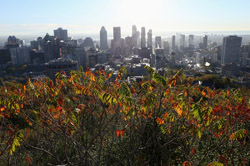
Inaugurated in 1876, the park was planned by Frederick Law Olmsted, a highly skilled designer of many major parks in the U.S., including New York’s Central Park. The following photos were taken from the Belvedere Scenic Lookout, which offers a panoramic view of downtown Montréal.

1535 - Guided by the native inhabitants of Hochelaga, Jacques Cartier climbs the mountain and names it Mount Royal

1643 - Paul de Chomedey, Sieur de Maisonneuve, erects a cross on the mountain to give thanks to God for saving the colony from a flood.

1676 - The Sulpicians establish a fort for an aboriginal mission at the foot of the mountain.

Skyline

Western Part

Eastern Part

Belvedere Camillien-Houde

The Cross

Some trails also offer panoramic views of the city :

Métro


Atwater

Peel

Place des Arts

Art on the Métro

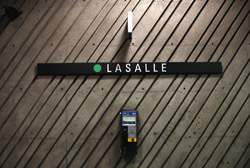
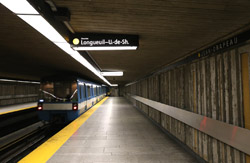
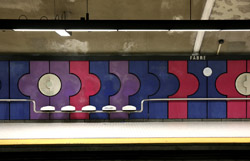
Artworks are not found in all 26 stations of the 1966 original system. By then, financing of art usually relied on the generosity of companies or organizations. Besides, artworks where not automatically included in stations’ plans, but integrated afterwards. The métro’s first artwork was inaugurated in 1967 – more than a year after the opening of the métro.

Rue Ste-Catherine

Rue Ste-Catherine is Montréal's main shopping street, home to upscale shops and restaurants, including Les Ailes de la Mode and La Baie department store.

Other Downtown Scenes

Mary Queen of the World Cathedral

In 1852, the Cathedral erected by Monsignor Lartigue at the intersection of Saint Catherine and Saint Denis Streets fell victim to one of the many east side Montreal fires. As a result, Monsignor Bourget decided to relocate the Cathedral to the west side of the city.

After eight years of convincing the faithful of this relocation, and after developing plans for a church based on that of Saint Peter's in Rome, Monsignor Bourget, assisted by Father Michaud (a cleric from Saint-Viateur) laid the first stone of the church designed by architect Victor Bourgeau on August 28, 1870. Due to the magnitude of the project and an interruption in the construction between 1878 to 1885, the opening of the Cathedral did not happen until 1894.

Railway Station

Rue Crescent

McGill University

McGill University was founded by a fur trader born in Glasgow. The university received its charter from King George IV in 1821. The downtown campus comprises more than 80 buildings on 80 acres of land.

Notre-Dame Basilica

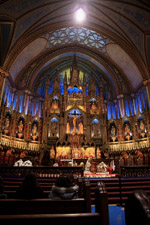
A masterpiece of Gothic Revival architecture, Notre-Dame Basilica was built between 1824 and 1829. The magnificent interior decor, in sculpted wood, paint and gold leaf and the boldly modern design of the Notre-Dame du Sacré-Coeur Chapel captivate hundreds of thousands of visitors each year. Paintings, sculptures and stained-glass windows illustrate biblical passages as well as three-and-a-half centuries of parish history of Montréal society. Daily tours are offered in French and English. In the evening a sound and light show presents the founding of Montréal and the Notre-Dame Basilica.

Place Jacques-Cartier

A major gathering place and entertainment site in Old Montréal, Place Jacques-Cartier draws passers-by and visitors who enjoy street artists, roving entertainers, jugglers, mimes, face painters and caricaturists. Built in 1804, and restored in 1998, on the old site of Château de Vaudreuil, Place Jacques-Cartier was used as a public market for many years. The Nelson column, erected in 1809, and a number of other buildings from this era blend harmoniously with the hotels and commercial structures of the 1850s and 60s.

Hôtel de Ville

Place d'Armes

Originally built at the end of the 17th century, Place d’Armes has become a very prestigious address in Montréal. The surrounding buildings are remarkable, mementos of all the major milestones in the city’s history. Since 1895, a statue of Paul de Chomedey, “Sieur de Maisonneuve”, the founder of Montréal, stands in the centre.

Clock Tower

Visitors can climb to the top of the tower for a free panoramic view of the city.

St. Lawrence Riverfront

Olympic Tower

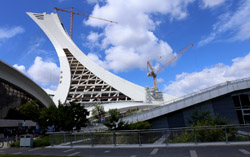
Built for the 1976 Summer Olympic Games, the Olympic Stadium is the Olympic Park’s centrepiece and is a bold design of the French architect Roger Taillibert. Topped by the tallest inclined tower in the world, the Olympic Stadium quickly became a choice location for major sporting events, rock concerts and mass gatherings. A funicular-type elevator brings visitors to the top three observation floors. The tower was not originally designed for observation, but rather to hold the stadium roof up through wires.

North

West

South

East

Olympic Stadium

Night-time in the City


SPECIAL NOTES

Wallpaper of Canadian bank notes provided by : The Bank of Canada