Silk Road Photo Gallery - Xixia Mausoleum No. 3
| |||
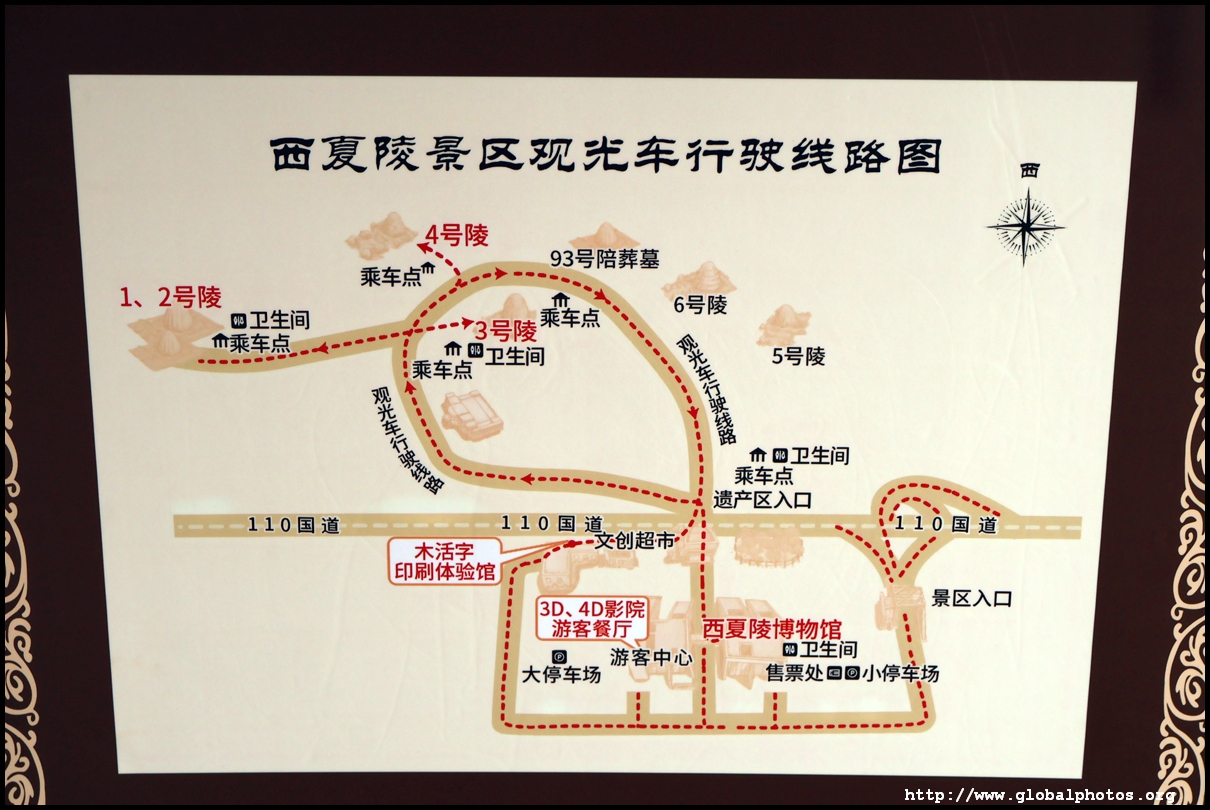
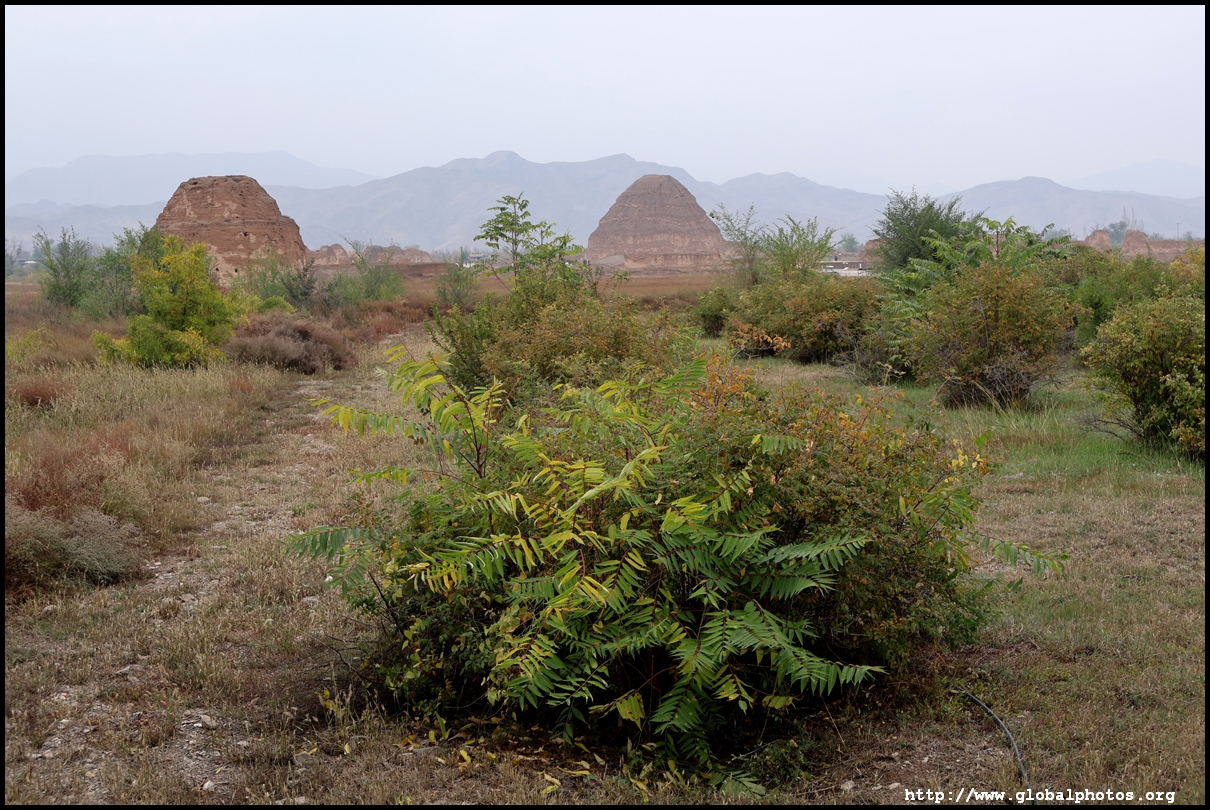
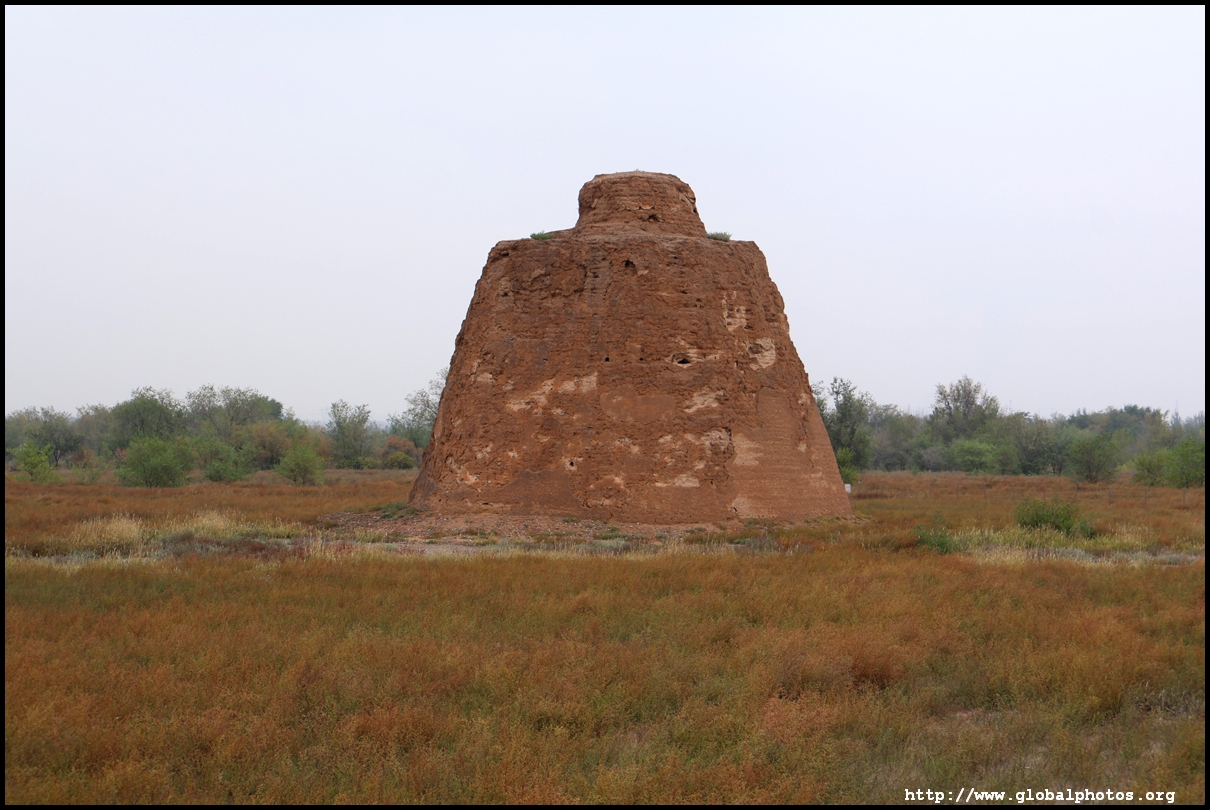
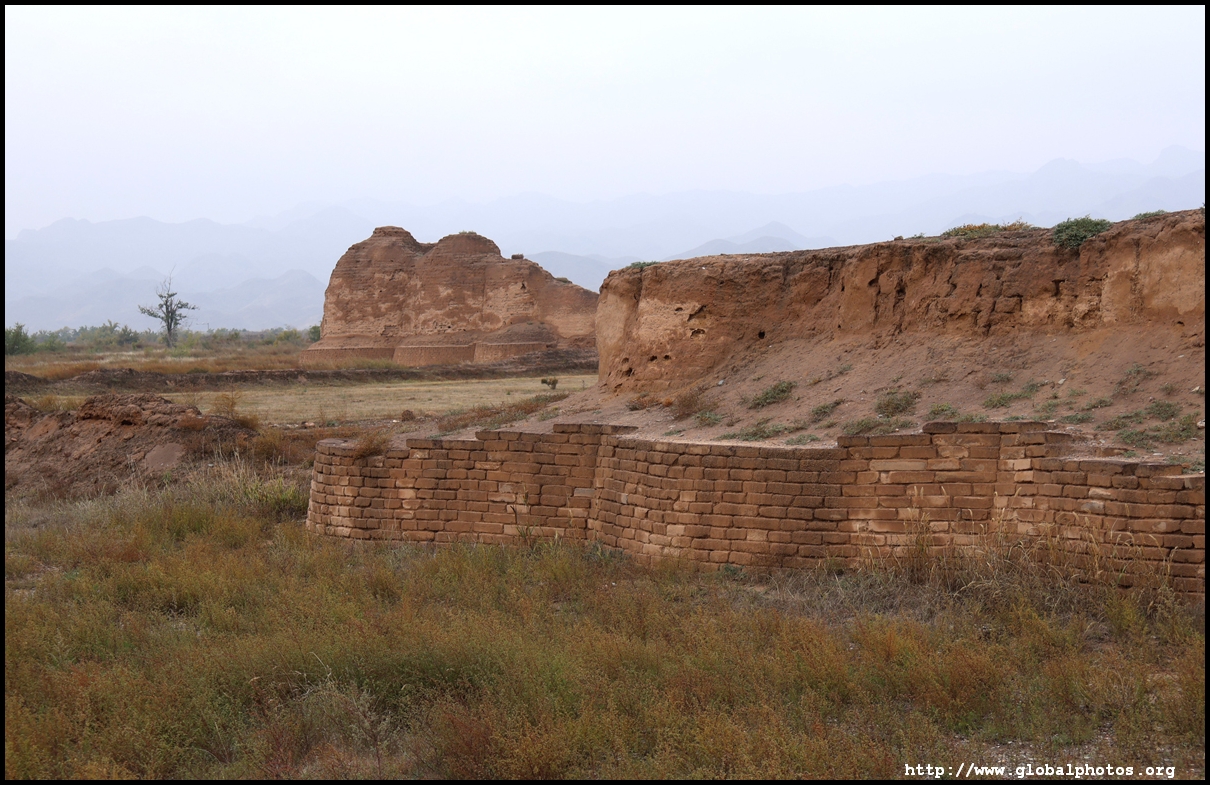
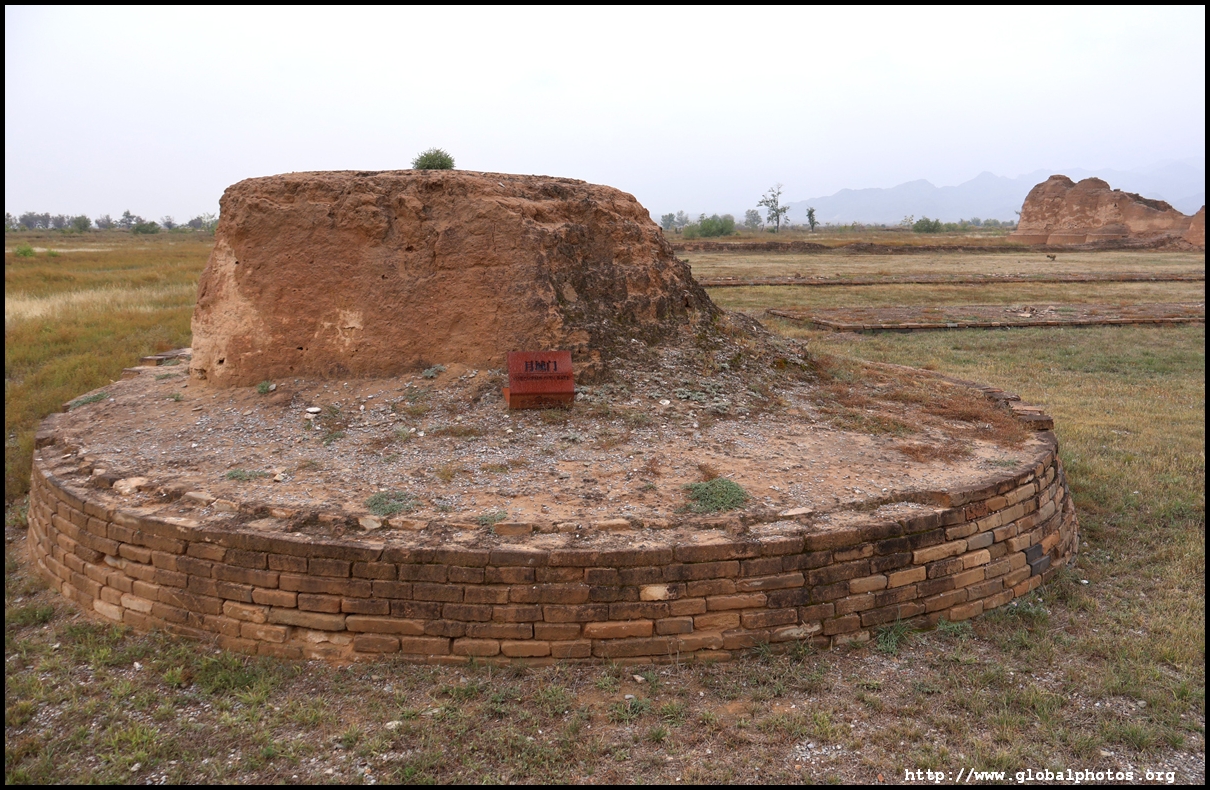
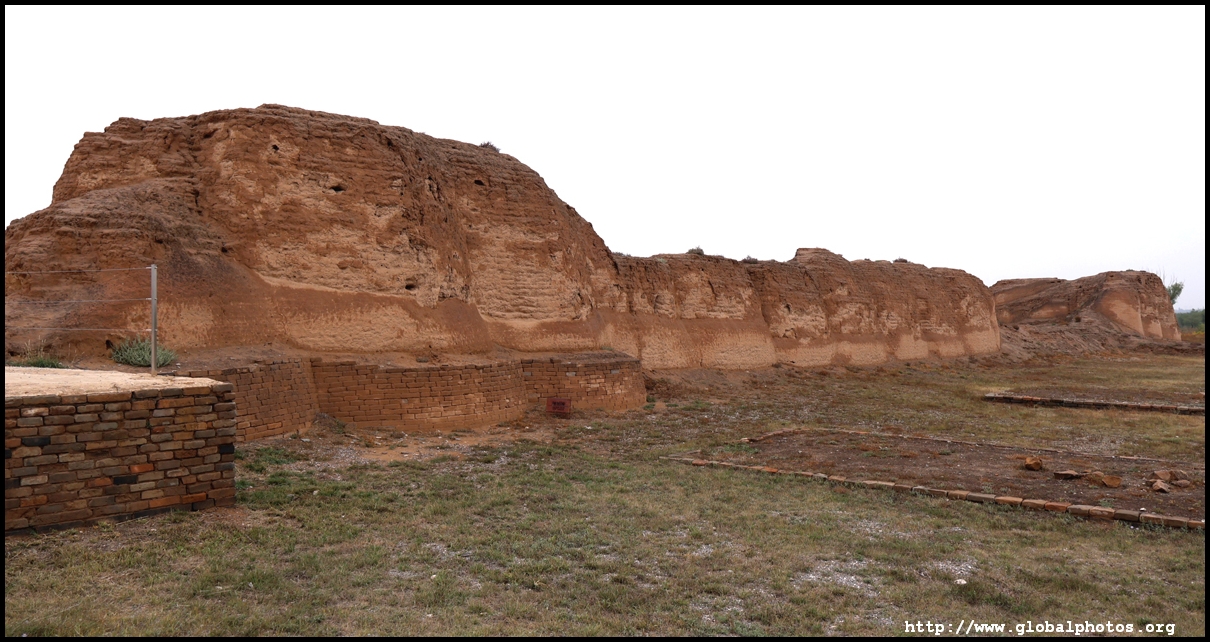
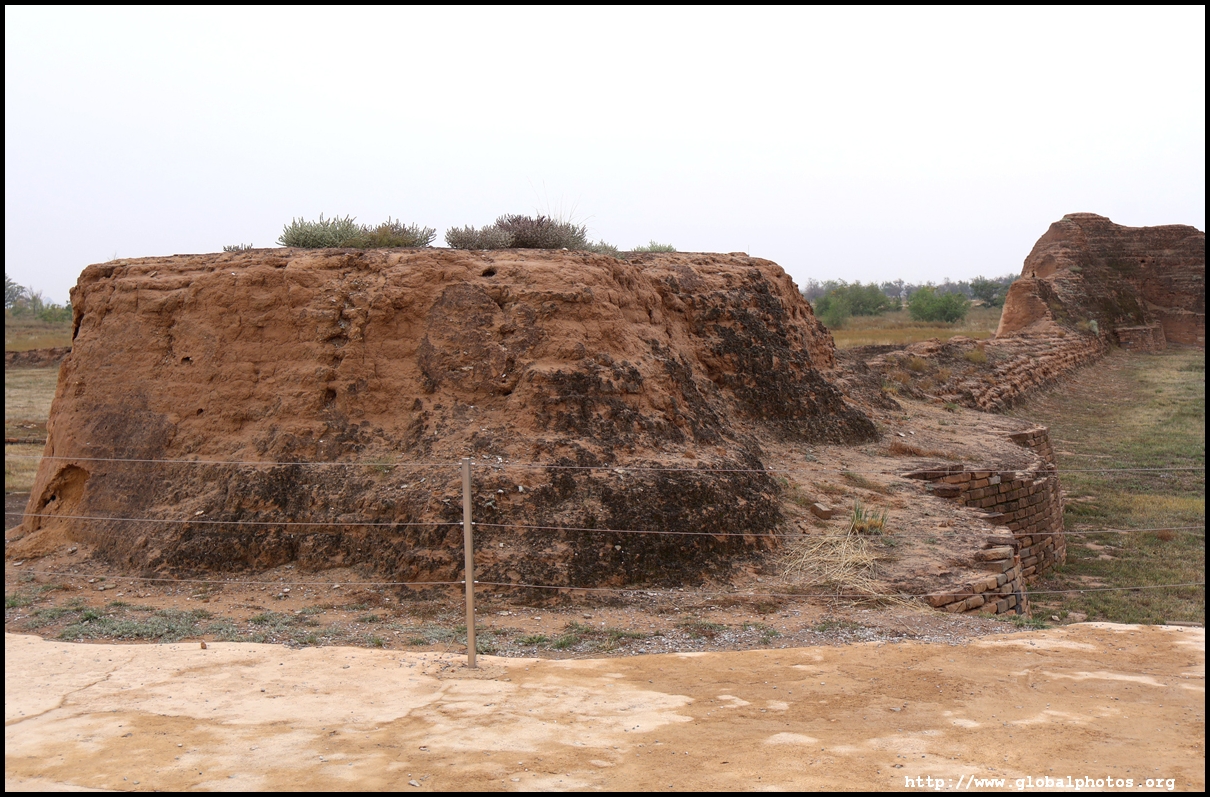
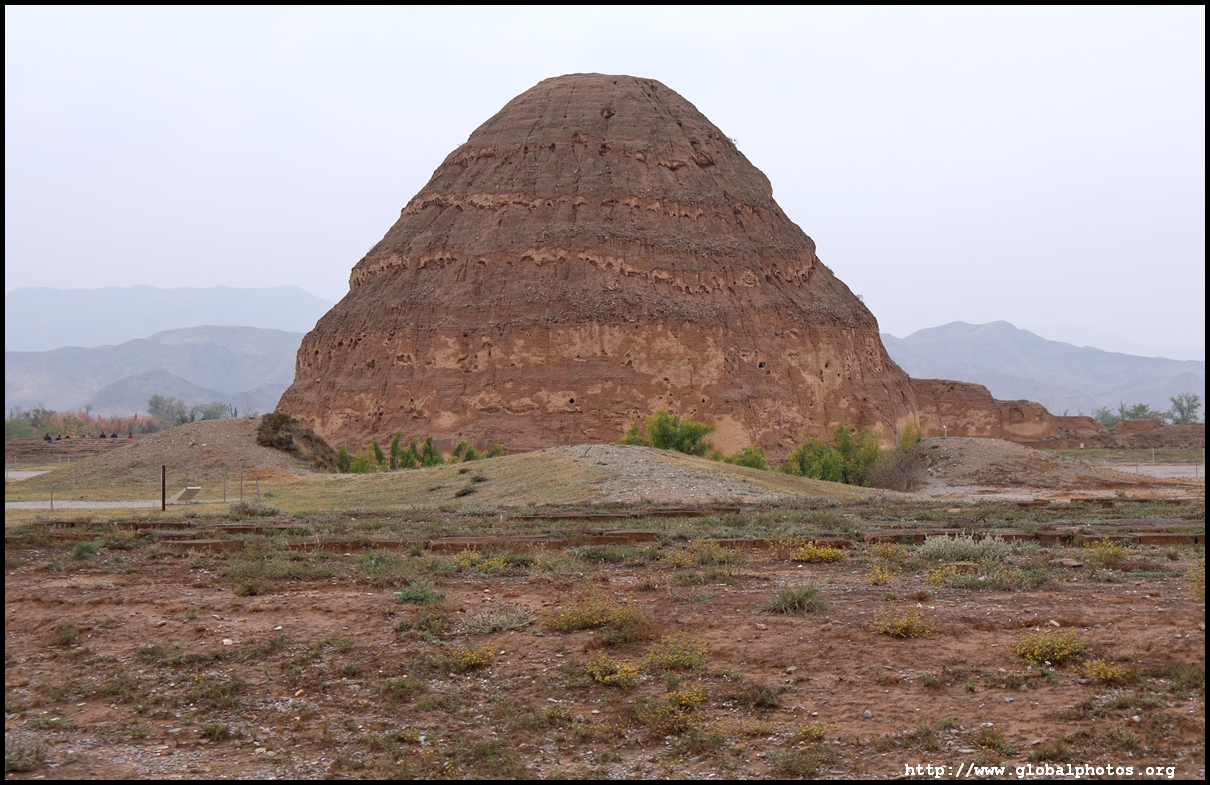
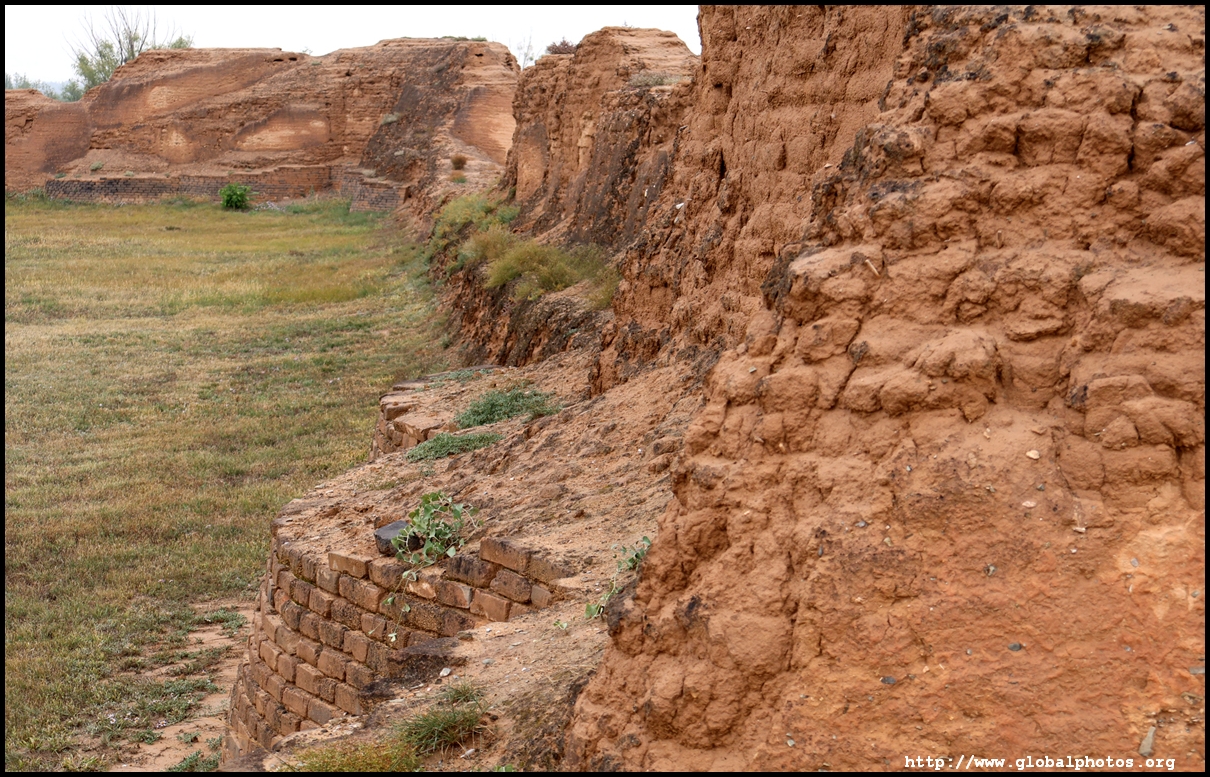
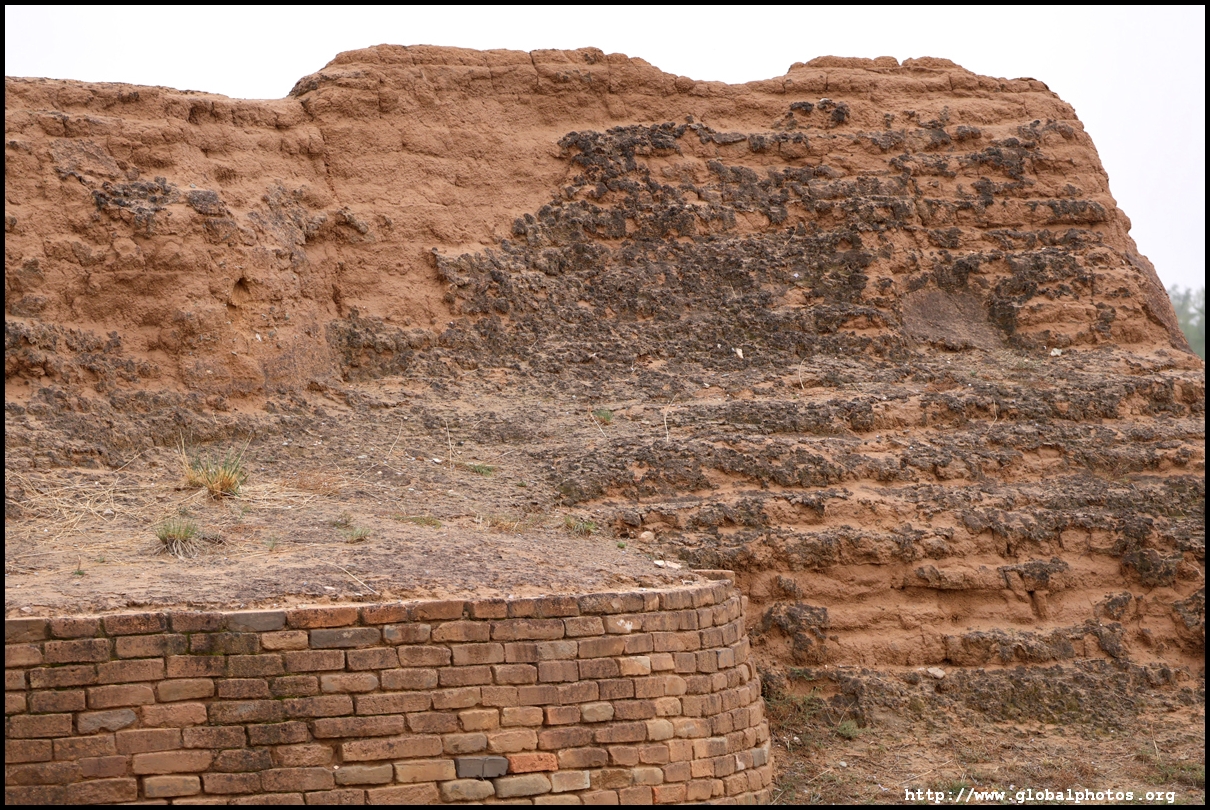
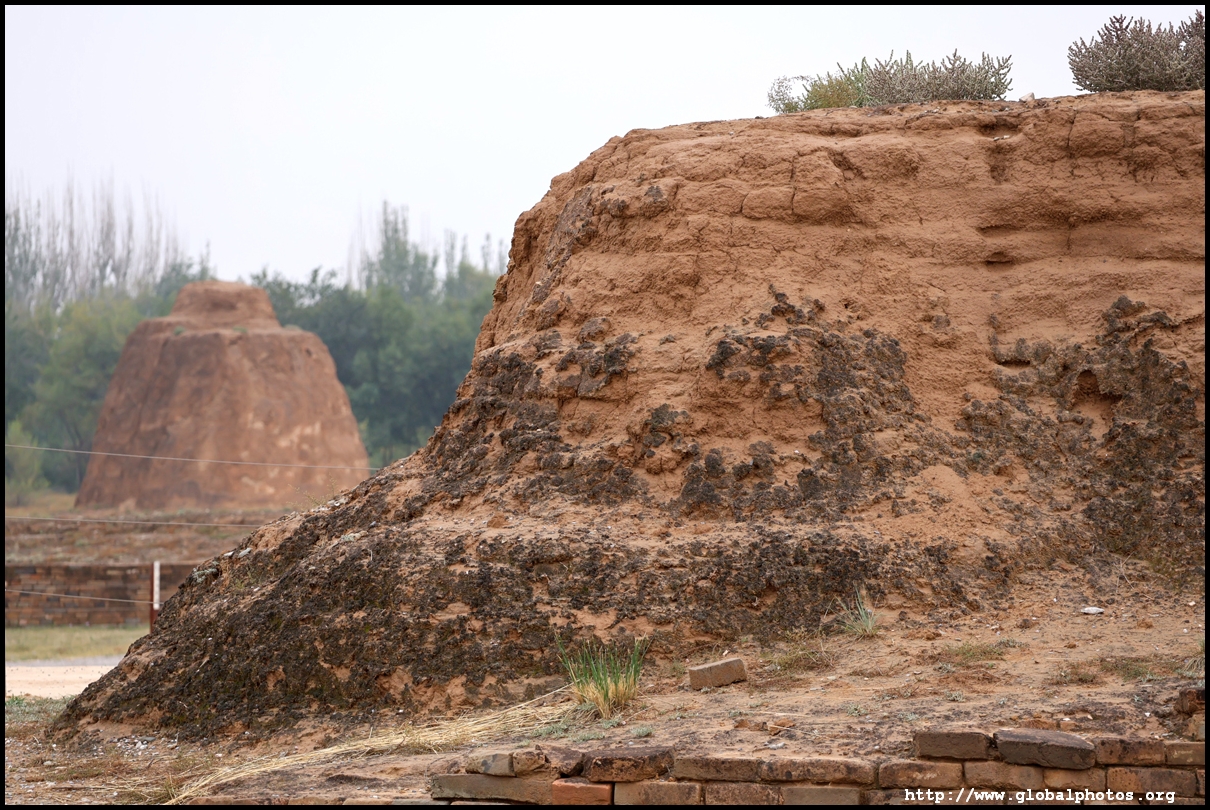
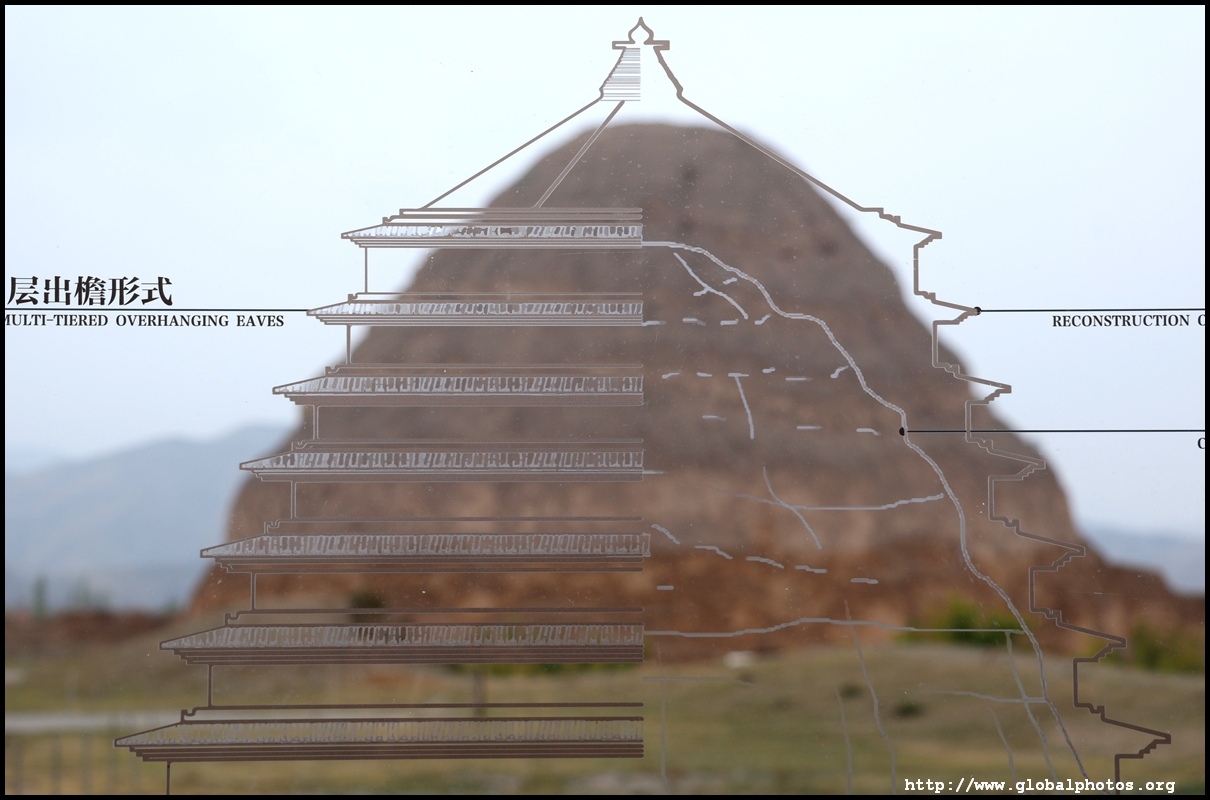
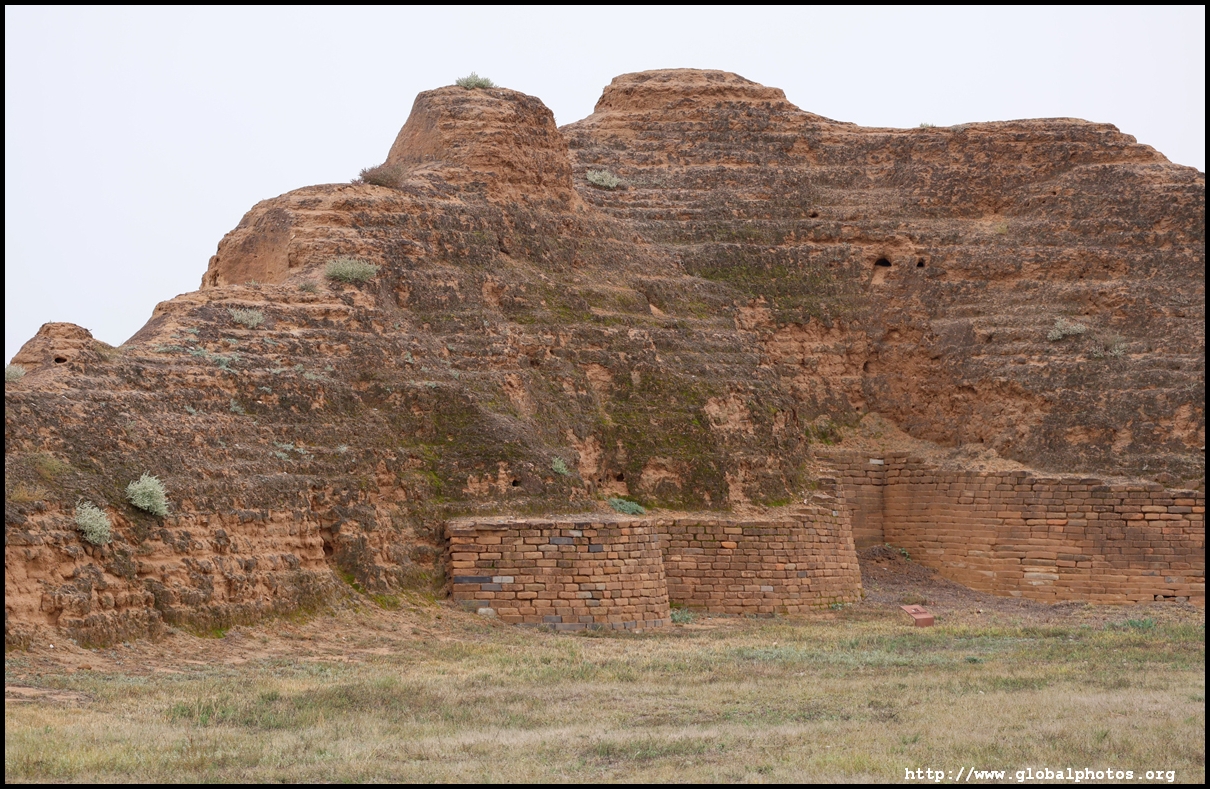
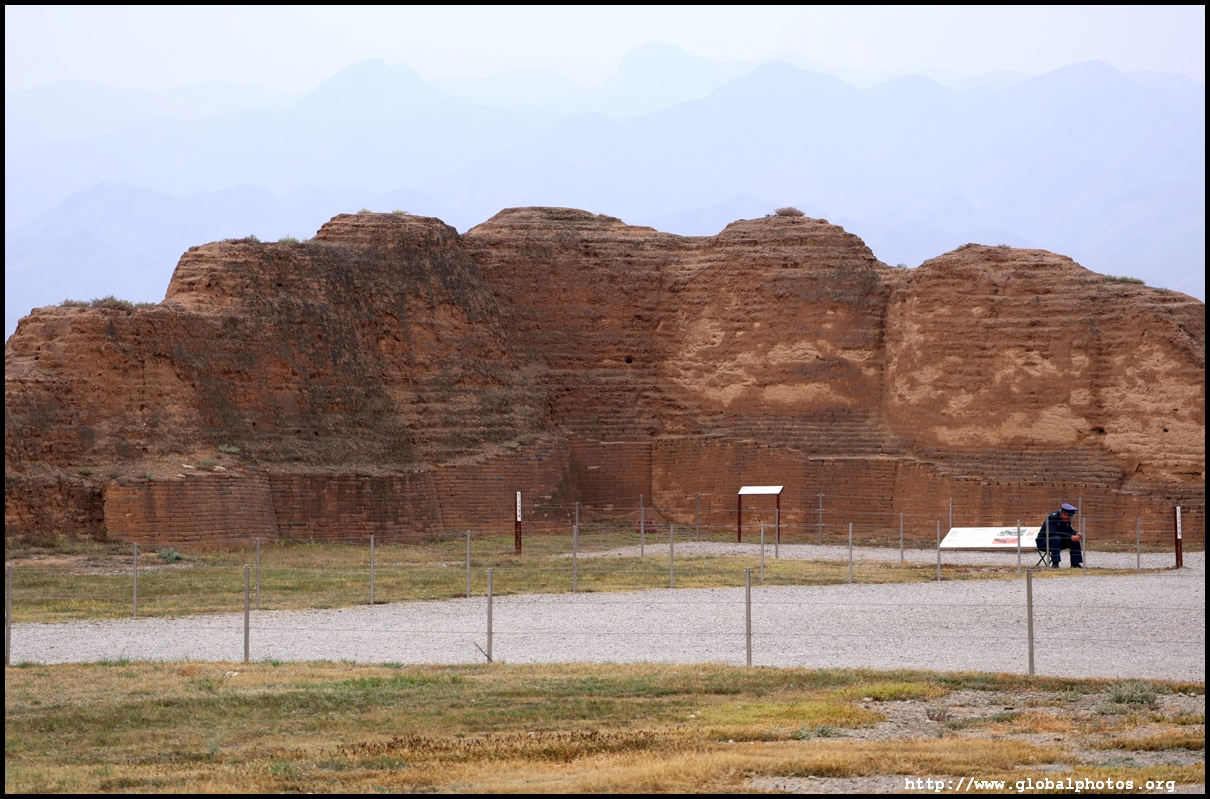
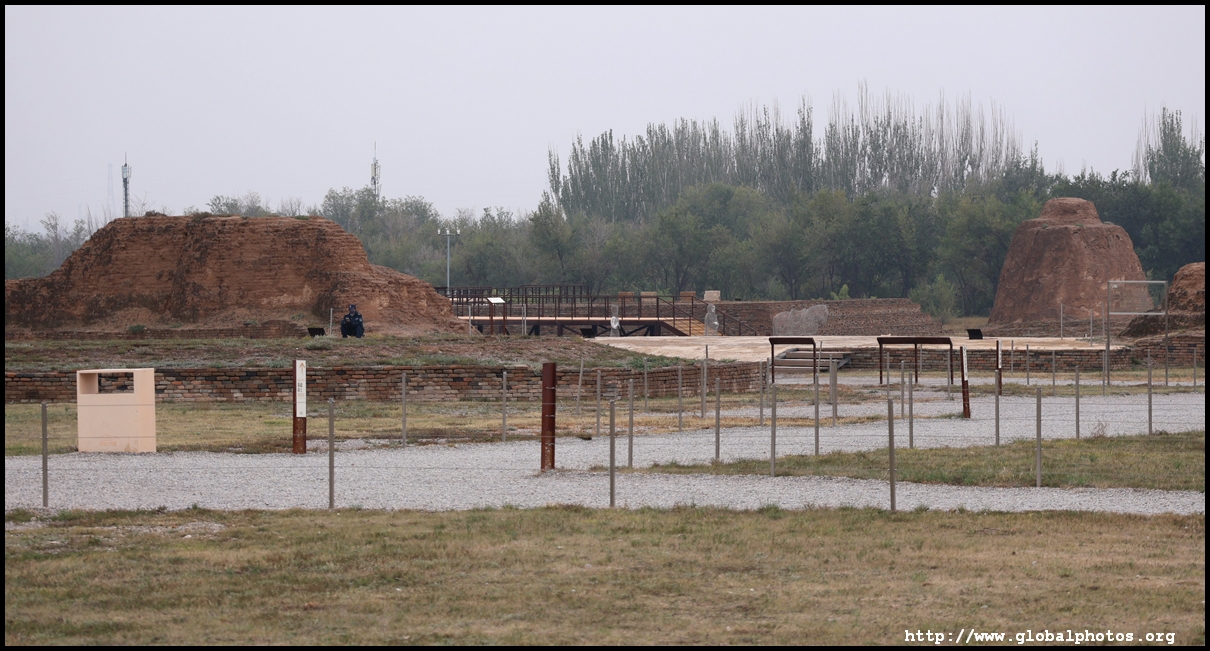
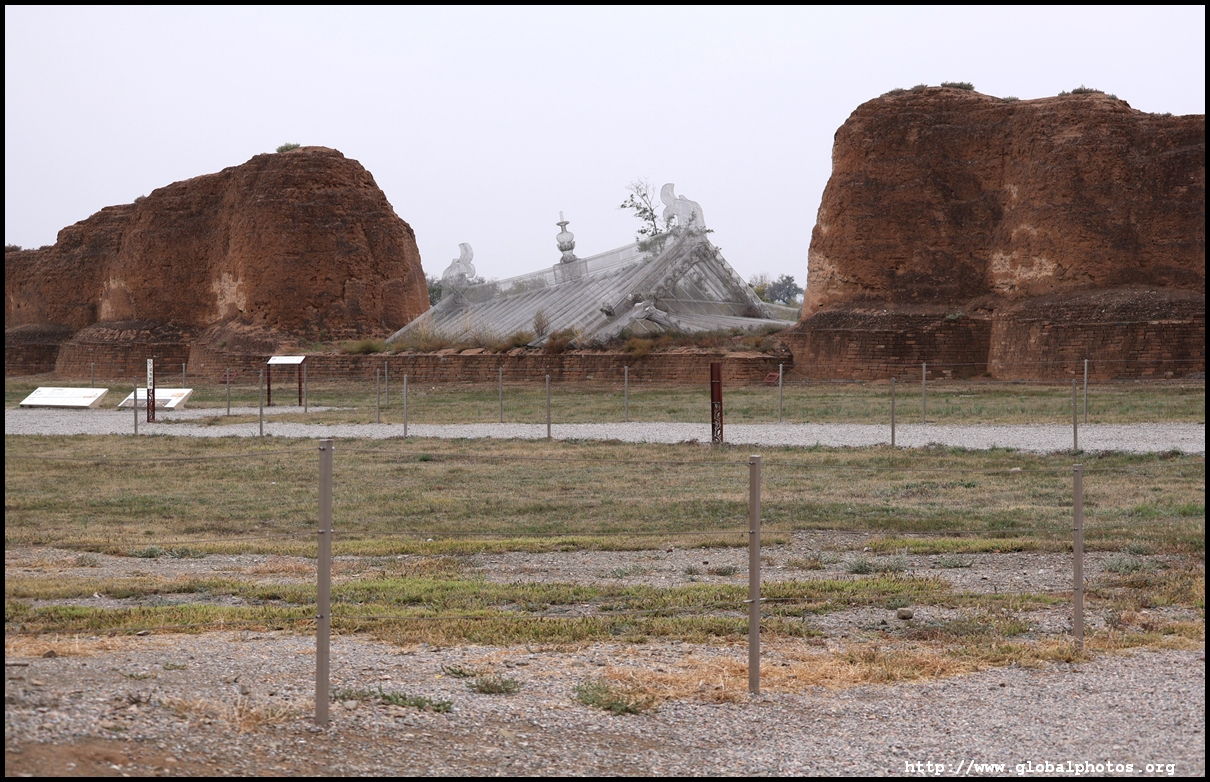
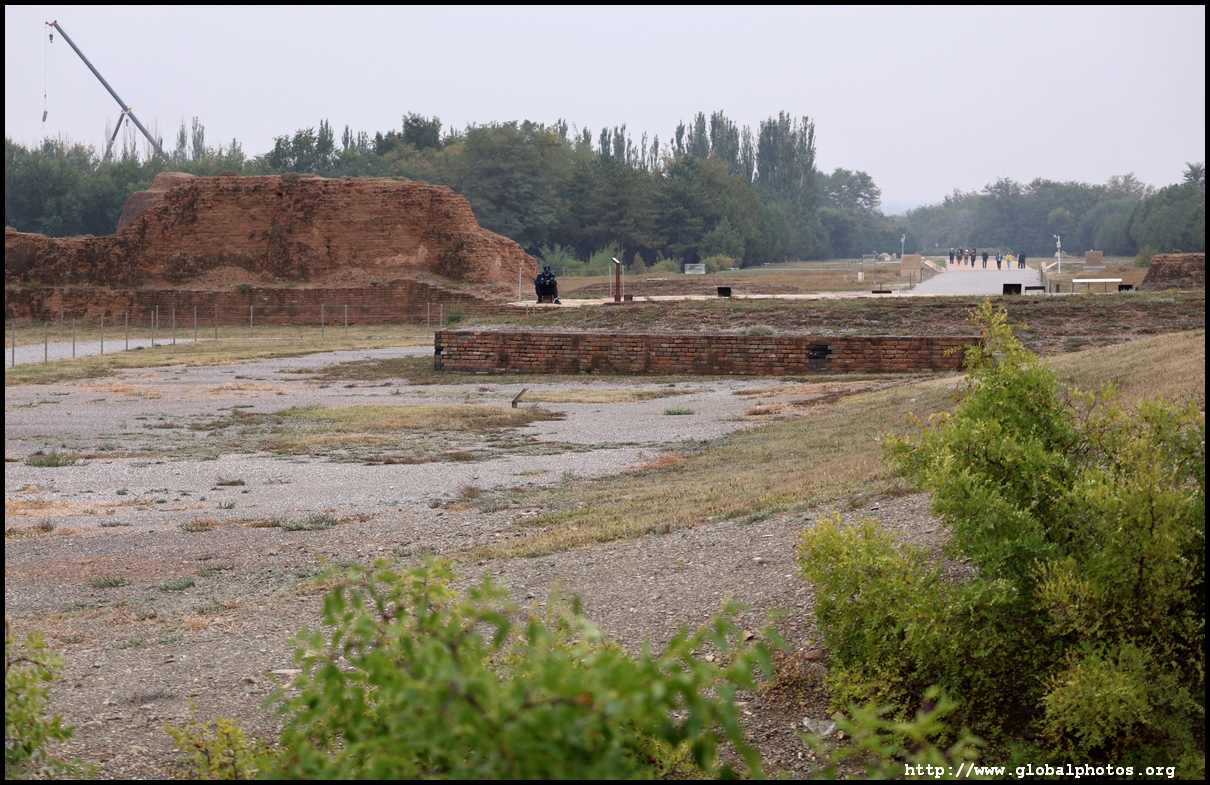
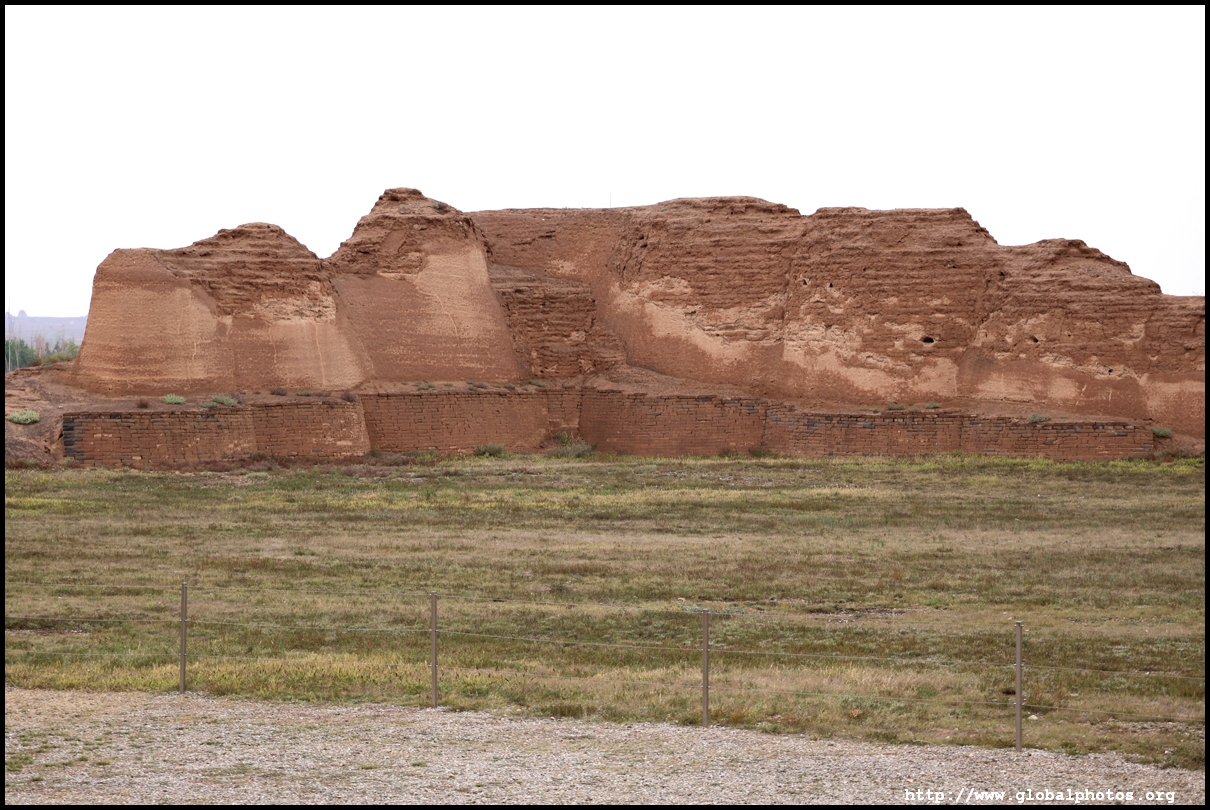
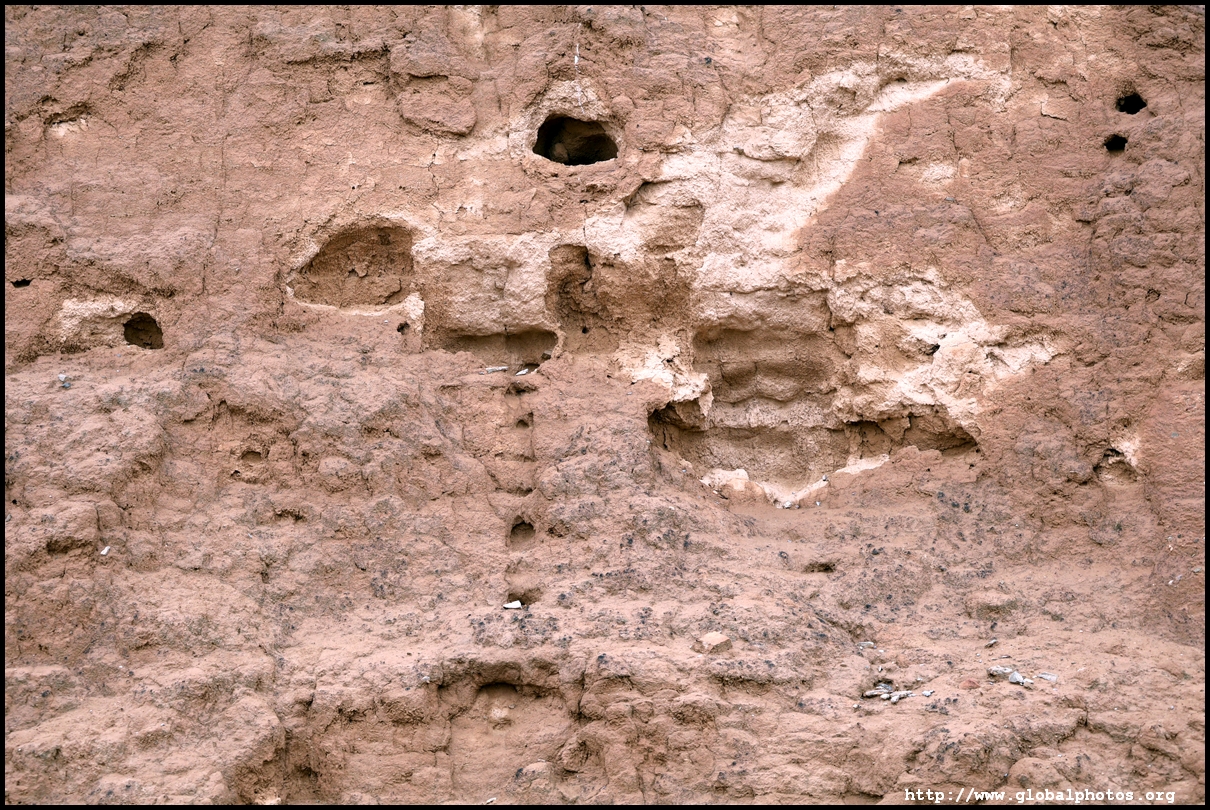
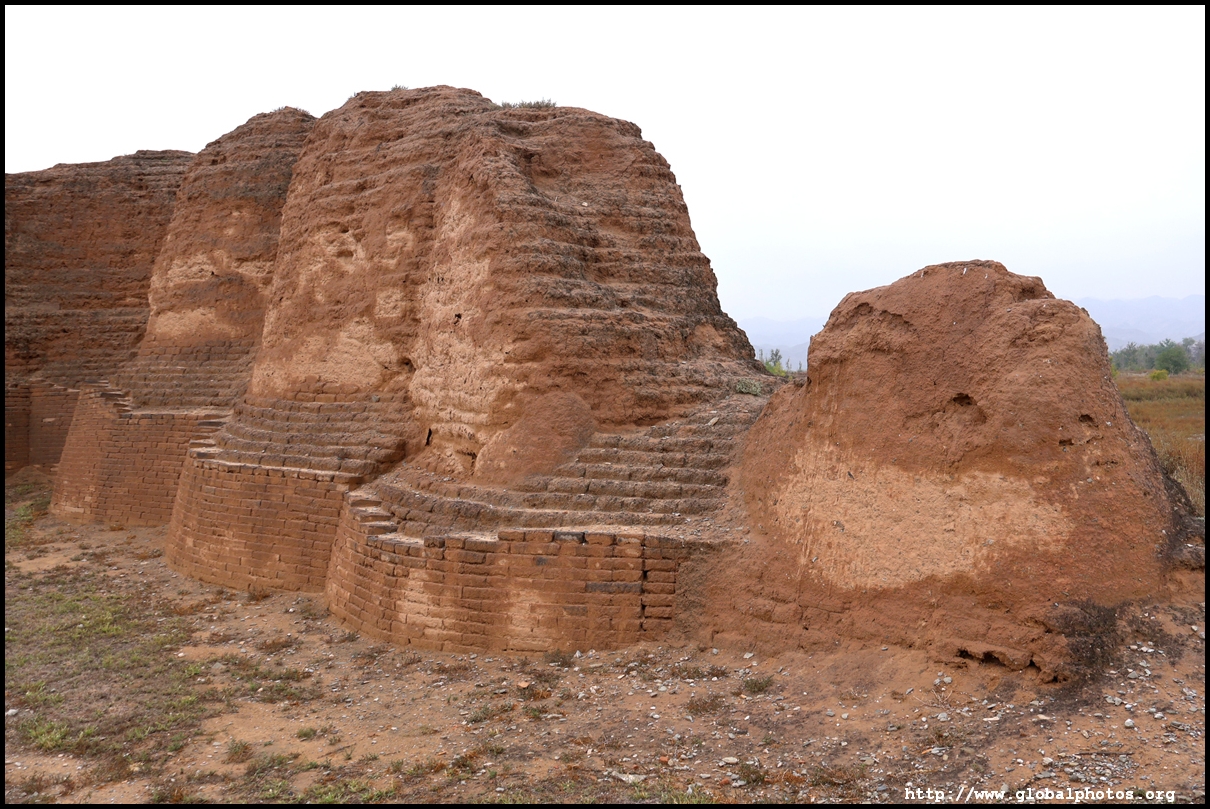
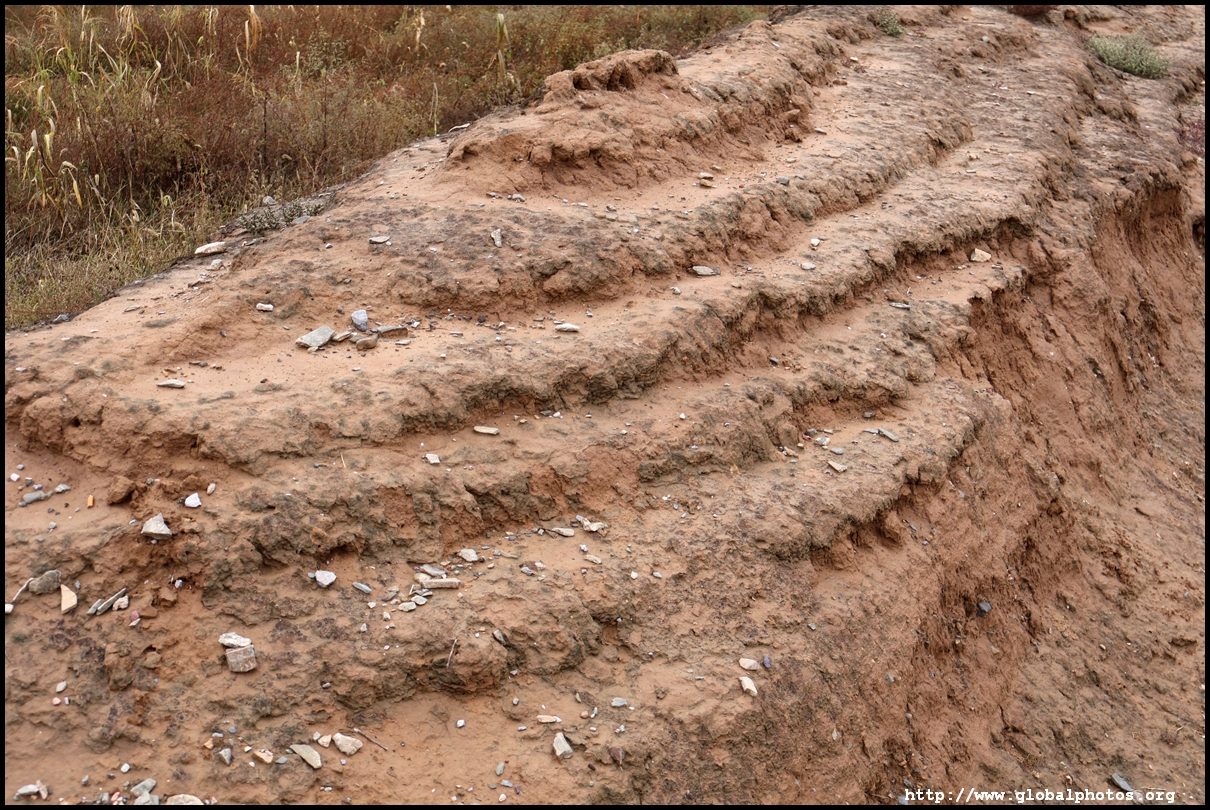
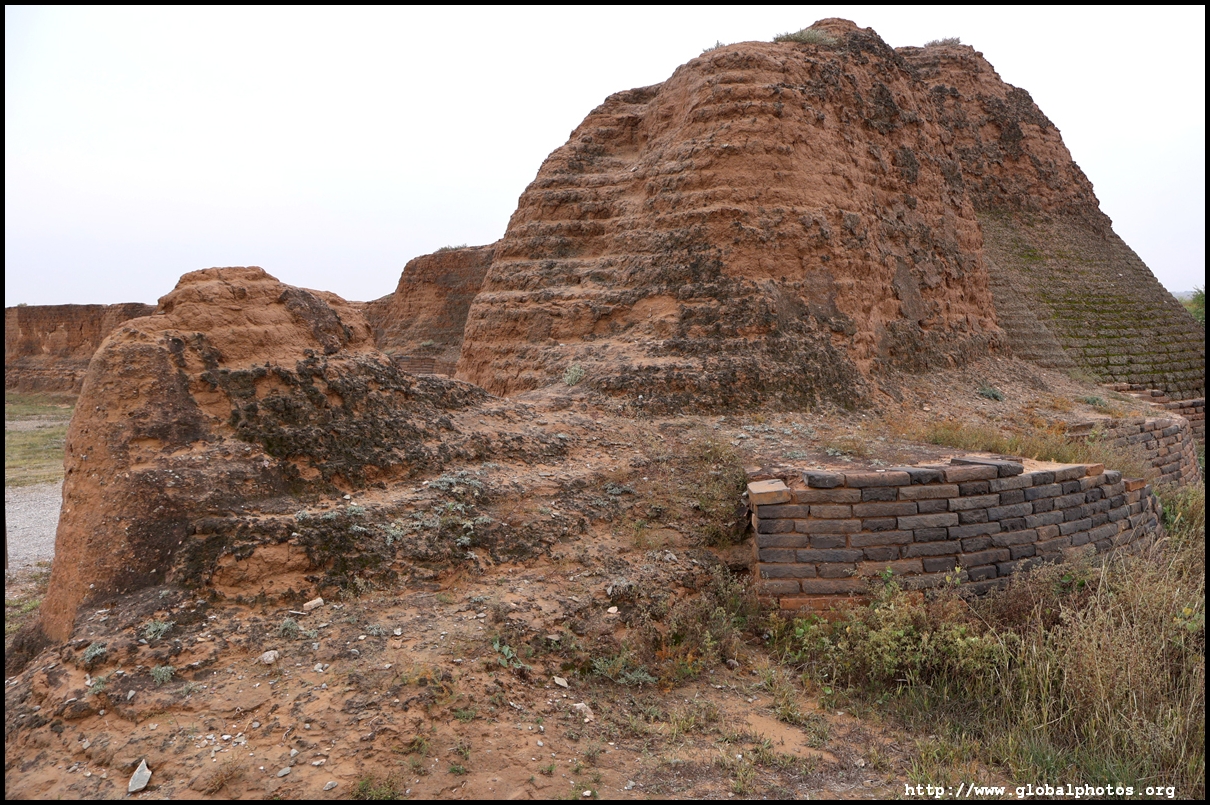
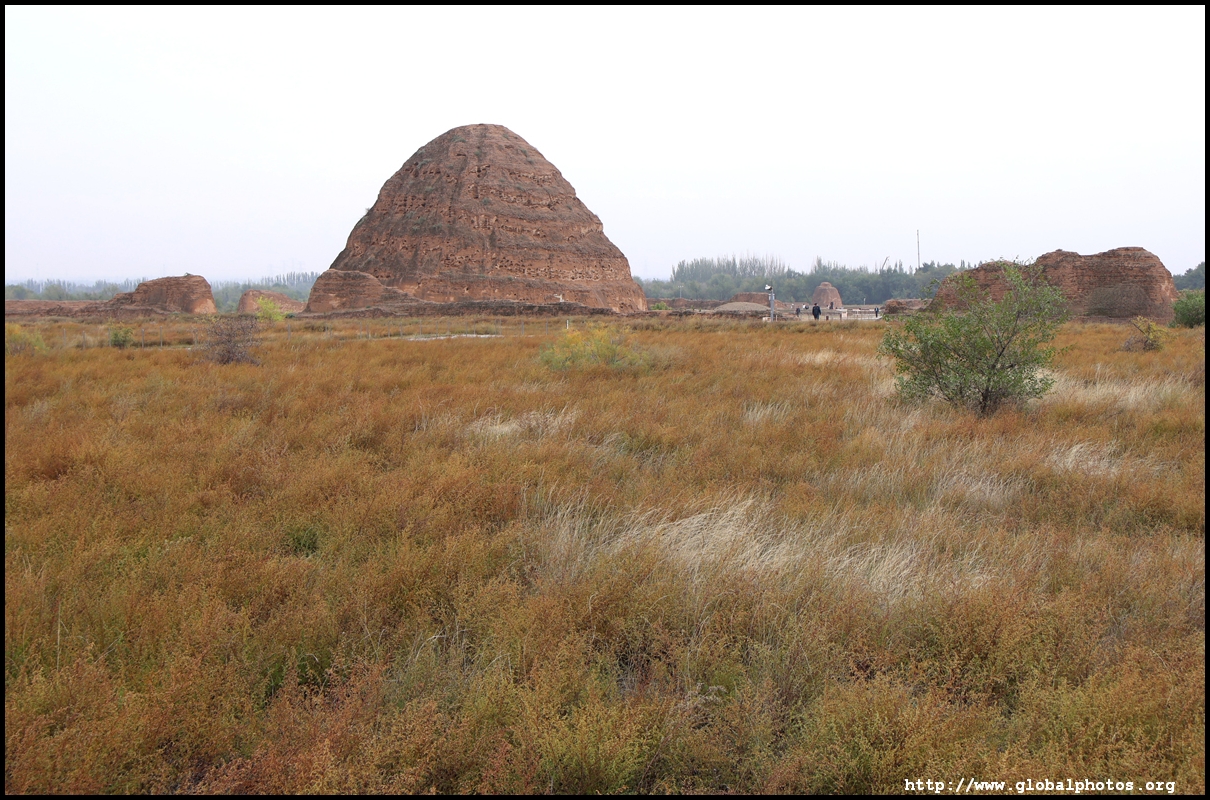
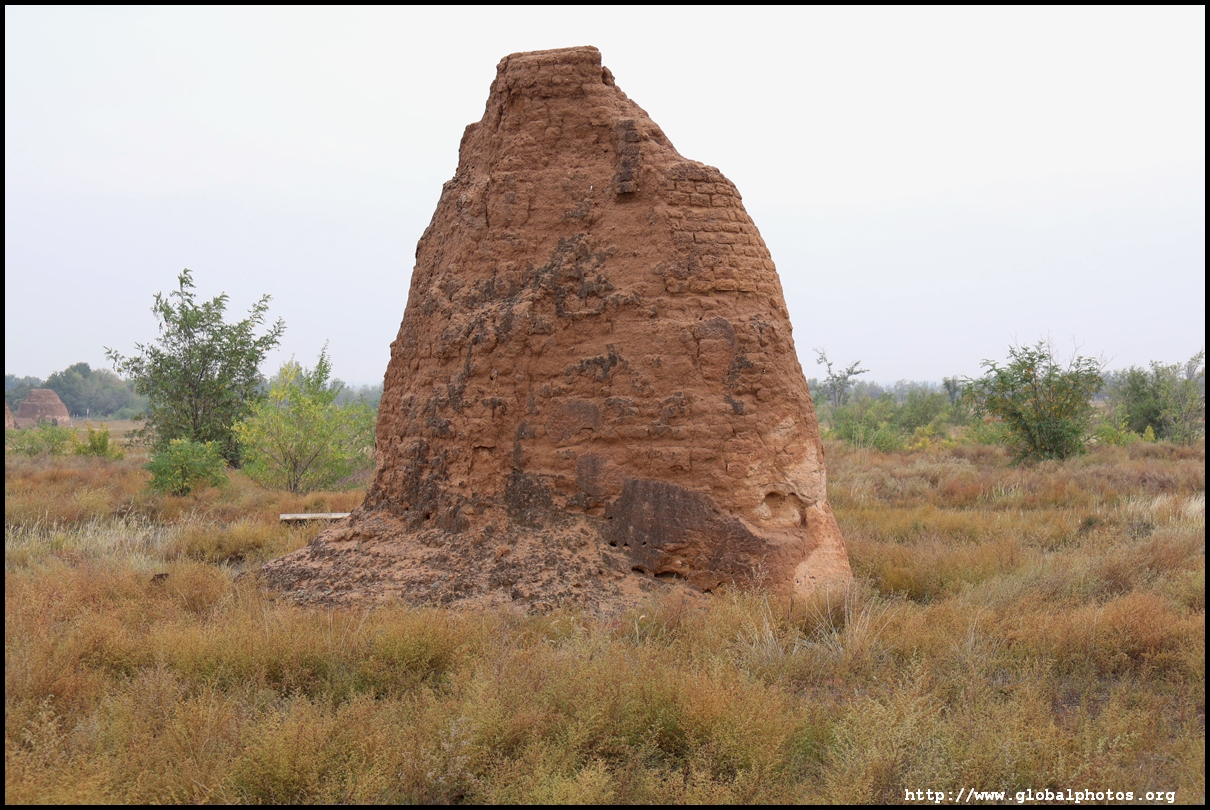
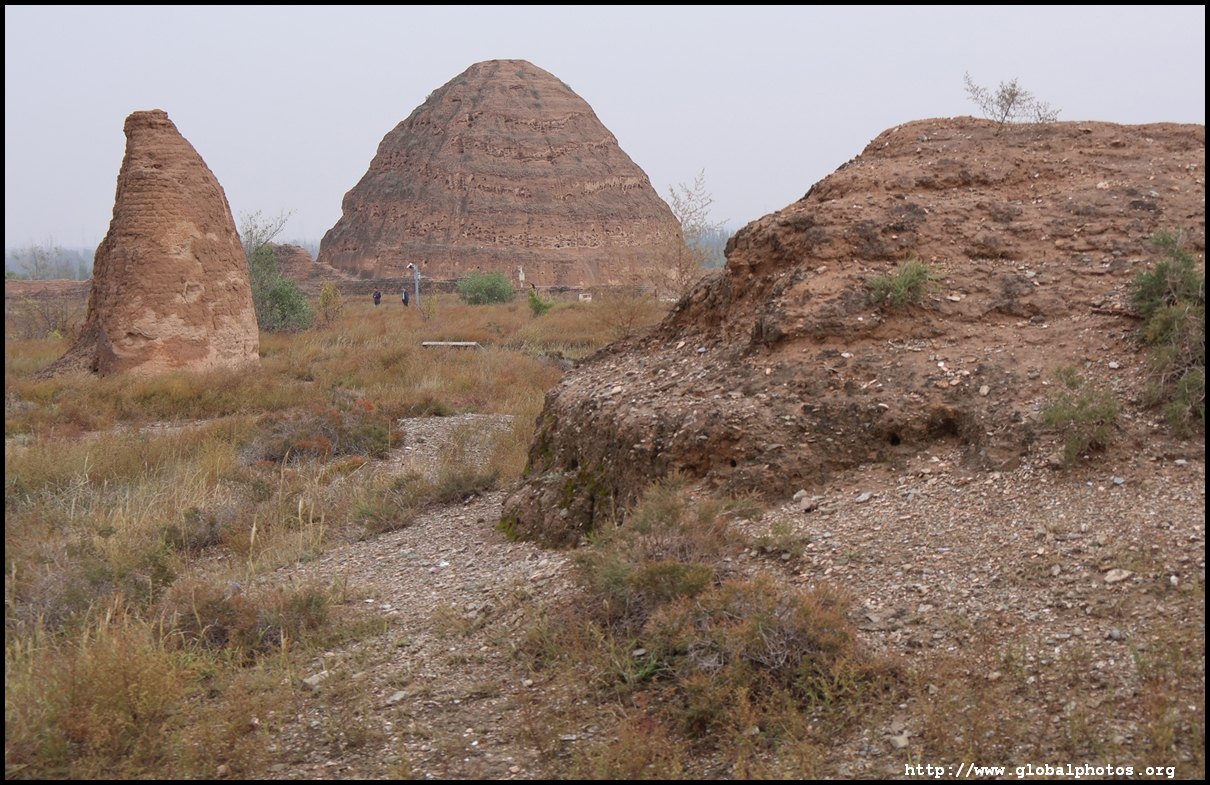
Yinchuan was once the capital of the Western (Xi) Xia dynasty, an empire ruled by the Tangut tribe from the 11th-13th century. Don't confuse that with China's Xia Dynasty, as the Tangut had named their kingdom after the original Xia.The Western Xia modeled their government after the Chinese Song Dynasty, although they used a different, more complicated writing system. The empire had 12 emperors and 9 mausoleum titles, with the last 3 emperors not earning any title. The assumption is they died during the empire's decline and mausoleums weren't built for them. The first leader buried here was Li Jiqian in 1004 at the eastern foothills of the Helan Mountains. The Western Xia dynasty was founded in 1038 and the royal tombs became imperial mausoleums. Genghis Khan and his Mongol army invaded and destroyed the Western Xia in 1227, inflicting major damage to the mausoleum and it stayed abandoned for the next 700 years. Surveys of the area were carried out in 1972, triggering archaeological excavations that would last into the subsequent decades. The site is vast so I recommend heading to the 3rd mausoleum first to explore the area, then return back to the museum to check out the dynasty's history. From the visitor's centre, it is a very long walk to the shuttles for the ride out. I'm not sure why they didn't put the shuttle stop right next to the museum though to make things more efficient. The 3rd mausoleum is a 7-tiered rammed earth pagoda structure with a circular base. Originally, wood and tiles would be attached outside to create the eaves. It is the largest on the site with its own miniature city that comes with gates and corner towers.
|
|||